
What is Engorgement & What are Clogged Ducts?
Engorgement refers to painful swelling and firmness of the breasts/chest in the early postpartum period when milk “comes in.” As the body rapidly increases milk production, typically on days 3-5, there is an increase in blood flow to the breasts. This can lead to extra fluid in the breasts (edema). Sometimes the engorgement can cause the breast to become firm, making it difficult for baby to latch. The tissue fluid can also push on the ducts (pathways for the milk to exit the breast), making it difficult to express milk.
A “clogged duct” presents as an isolated, tender, firm area in the breast. It can occur when milk is not draining well. There is often swelling and inflammation around the duct compressing milk flow, as opposed to something inside the duct preventing the milk from flowing.
Management:
1. Reduce Inflammation and Swelling:
Ice the area of edema (e.g., ~10 minutes every 30 minutes as tolerated). Frozen peas or gel ice packs wrapped in a thin towel placed in a bra work well. Avoid placing the ice over the nipple.
Pain medication – NSAIDs (e.g. ibuprofen) and acetaminophen can help with pain and inflammation
These measures help decrease surrounding tissue edema, making it easier for milk to flow and baby to latch.
2. Continue to Breastfeed and Hand Express as Needed:
Continue physiologic breastfeeding at typical intervals. This helps remove milk without overstimulation. Do not over pump or try to “empty” the breast. This will increase milk supply and blood flow to the breast worsening swelling and pain.
Hand expression can be useful when needed to gently relieve pressure without inflaming tissue.
If you are an exclusive pumper, try to pump only what the baby drinks; now is not the time to create a stash of milk in the freezer.
3. Avoid Harmful Practices
Avoid vigorous massage; this can worsen inflammation, injure the breast tissue, and increase risk of infection.
Avoid heat applications such as hot packs or extended warm showers; these may exacerbate swelling. However, very mild warmth just prior to feeding, may provide pain relief to some women.
4. Consider lymphatic drainage
Since the painful swelling is due to tissue fluid surrounding the milk ducts or “channels,” gentle lymphatic drainage may be helpful to move the fluid out of the breast
With gentle pressure using your fingertips, make 10 small circles on either side of your neck just above the clavicle
Then make 10 small circles in each armpit, again gently like the pressure used to pet a cat
Finally, apply gentle strokes to each breast from the nipple to the edges of the breast, going around the entire breast
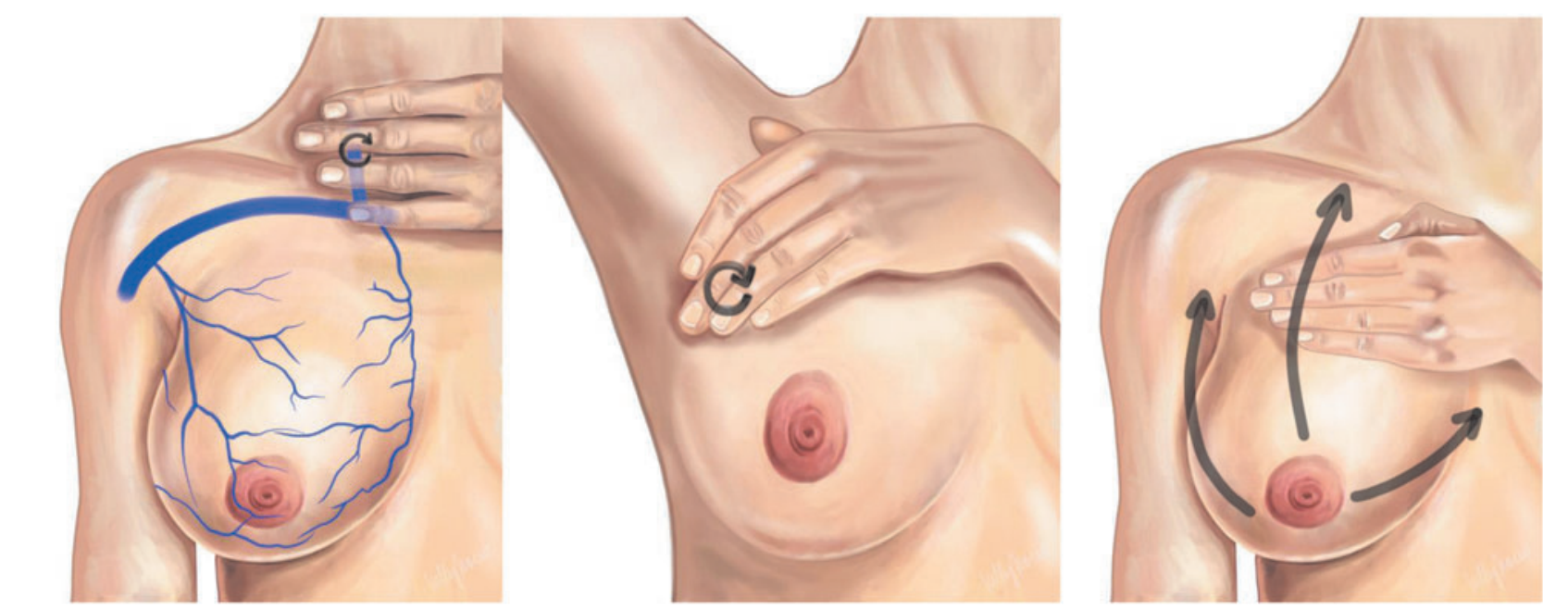
Kelly Russo, MD, ABM Protocol 36
5. Fine Tuning
Encourage good latch and positioning with a skilled lactation consultant if milk removal is inefficient.
Monitor for worsening symptoms: escalating pain, localized redness, fever, or systemic symptoms may require further evaluation by a physician and may require antibiotics.
For more information, see the Academy of Breastfeeding Medicine’s Protocol
https://www.bfmed.org/assets/ABM%20Protocol%20%2336.pdf